Filmed, not generated. Real footage — MarkaMotion adds only the brand on the kit. Generic kit, placeholder sponsors.
Sold by region,not by season.
Inventory priced per territory, per competition, per match window — instead of one global deal locked for three years.
 Finalist, PSG Lab pitchWeb Summit Qatar 2026


A surface you already own,
sold as many times as you're watched.
 BRAND A
EU-WEST
A shirt front sold globally earns once. Rendered per territory, the same surface can carry a different sponsor in every market a club is broadcast into — added alongside the existing deal rather than in place of it, wherever that deal is drafted territorially.
A patent family — granted and pending, across several jurisdictions.
Nothing physical moves
The same surface is inventory more than once. One sponsor can hold a market for the whole match; another can hold the minutes either side of half-time somewhere else. Priced per window, not per season.
Share of screen and dwell, measured per feed
The shirt can change with the match, not only between matches.
Every category, market and window is theirs to approve or refuse before it airs. A sponsor cleared for one feed never appears in a feed it was not cleared for.
The shirt is the media.
Three ways to partner.
Not a logo on a garment — a surface that can carry a different partner every time it is watched. The same method runs on recorded video, on the live feed, and on a person standing in front of a screen.


Highlight clips and archive, re-sponsored per market.
One clip carries a different partner in every territory it is posted to, and a logo already printed on the shirt can be removed and replaced.
Send us one clip

The same substitution, inside the live feed.
Per territory, per competition, per window. This is the one the whole model is built for, and the first pilots are running now.
Talk about a pilot

A live screen that puts a brand on whoever stands in front of it.
A full team kit, or just a logo on the shirt they are already wearing. It travels to the activation, or it lives in the venue — and it is the fastest way to let somebody understand the company in ten seconds.
Book the rigRights holders open new markets.
Brands appear only in theirs.
The same shirt surface, rendered differently for every broadcast feed. Rights holders open markets their existing deal never reached. Brands appear in the market, the competition and the minutes that are worth it to them — and nowhere else.
Clubs, leagues & broadcasters
You already sold the front of the shirt once. Earn from it in every other territory too — without touching the physical kit, and leaving your existing sponsor’s contracted markets exactly as they are.
- Existing sponsor stays intact in their contracted markets
- New sponsors fill the territories that deal never covered
- No redesign, no re-manufacture, no stadium changes
- You keep control of who appears and where
Brands & advertisers
Shirt sponsorship has always been all-or-nothing and global: every market, or none. Take the region, the competition and the minutes that are worth it to you — and see exactly what they returned.
- Visibility only in the markets you actually sell in
- Reach clubs whose global deal was never for sale to you
- Share of screen and dwell, reported per feed
- Creative that can change between fixtures — or within one
Same second of play.
Two different sponsors.
One rally, one frame, two sponsors. Drag the bar to move between the feed sent to one territory and the feed sent to another. Both sides are the same instant of play — the only thing that differs is the shirt.
Filmed, not generated. Both sides are the same real passage of play. Nothing here is generative AI — MarkaMotion adds one thing, the brand on the kit, exactly as it is inserted inside a broadcast feed. The kit carries no club identity, the sponsors are placeholders, and no competition or third-party mark is shown.
Built by people who have
changed this industry before.
 AA
Dr. Amine Arezki
Virtual sponsorship on playing kit is his own creation — the method, and the company built on it. PhD in Robotics, Executive MBA from London Business School. Former Director of Marketing and Chief Value & Branding Officer at Thales, after leading its autonomous driving division. TEDx speaker, and named a CMO to Watch in 2024.
LinkedIn PA
Dr. Pankaj Agarwal
Club owner, which puts the person running MarkaMotion’s operation on the side of the table it has to win over. Over a decade as an NHS consultant, and a property portfolio built into the multi-millions since 2017. Runs partnerships, operations and growth.
LinkedIn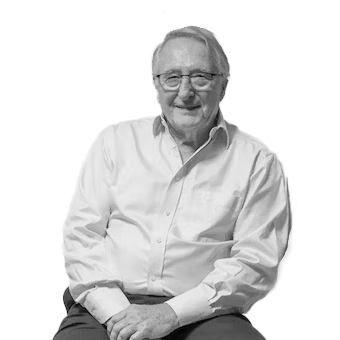 JF
Joe Foster
Co-founder of Reebok. Started it in a Bolton workshop and took it past Adidas and Nike to the top of the industry — a $4bn business built on the argument that an incumbent’s lead is never permanent. Sits on several corporate boards. Advises MarkaMotion on brand, category creation and going to market against incumbents.
LinkedInThe thirteen things people ask
before the first meeting.
What is virtual sponsorship on playing kit?
A shirt carries a sponsor. That sponsor is painted on the fabric, so everyone watching anywhere sees the same one. Virtual sponsorship changes where the brand lives: instead of the fabric, it is rendered onto the kit inside the broadcast chain, in the same place a score bug or a virtual pitch-side board already sits. Because the feed sent to each territory is a separate feed, each one can carry a different brand. The shirt in the stadium never changes.
Does it replace the club's existing shirt sponsor?
No, and this is the part that matters commercially. The existing sponsor keeps every market their contract covers, exactly as drafted. What MarkaMotion sells is the territories that deal never reached — a club broadcast into forty markets typically sold its shirt front for one of them and gave away the other thirty-nine. Those become inventory. It is added revenue on a surface already owned, not a renegotiation.
Is this generative AI? Are the videos real?
The footage is real and unaltered. Nothing is fabricated, no player is synthesised, no passage of play is invented. The artificial intelligence involved is computer vision and machine learning doing one job: finding the kit surface in each frame, tracking it through motion, occlusion and folding fabric, and compositing the brand onto it so that it moves as though it were printed there. That is the same class of technology behind virtual pitch-side advertising, applied to a surface nobody had solved before. Every clip on this page is labelled filmed, not generated for exactly that reason.
What technology is behind it?
Computer vision for surface detection and tracking, machine learning models trained on kit under real broadcast conditions — floodlight, motion blur, rain, compression — and a rendering stage that matches the brand to the lighting and the fold of the fabric so it does not look pasted on. It runs inside the broadcast chain rather than on the camera, which is why nothing physical has to change and why each territorial feed can differ. The method is patented.
Does the kit have to be redesigned or re-manufactured?
Nothing physical moves. No redesign, no re-manufacture, no change to stadium signage, no different shirt for the away leg. The playing kit that exists is the playing kit that is worn. This is the reason a club can go from agreeing the idea to earning from it inside a season rather than inside a kit cycle.
How is the inventory priced and sold?
By the four things that actually vary: the event, the surface — front of shirt, sleeve, back, shorts — the territory whose feed it appears in, and the window of the match. A brand can hold the front of shirt in one market for a whole fixture while another holds the sleeve in a different market for the minutes either side of half-time. Priced per window, not per season, which is what lets a brand buy the visibility it can actually use instead of a global deal it cannot.
Who decides which brands appear, and where?
The rights holder, always, before anything airs. Every category, market and window is theirs to approve or refuse. A brand cleared for one feed never appears in a feed it was not cleared for, and a rights holder can bar a named company outright. That control is not a feature bolted on afterwards — it is the thing the whole system is built around, because a sponsor that is lawful in one market may be unlawful in the next.
Is virtual advertising in a broadcast feed legal?
Virtual advertising inserted into a sports broadcast is established practice — pitch-side replacement has been running in major competitions for years, and the European framework for audiovisual media services contemplates it. What varies by market is which categories may appear: alcohol, betting and pharmaceutical rules differ sharply between jurisdictions, and a feed going to one country may not carry what the feed next door can. That is precisely why approval sits with the rights holder and why eligibility is checked per territory rather than assumed. We are not your counsel, and any deployment should be run past yours.
Which sports does it work in?
Any sport where a broadcast camera sees kit for a sustained period. Football, basketball, tennis and athletics are shown on this page; rugby, cricket, handball, volleyball, cycling and motorsport all present the same problem and the same surfaces. What matters is dwell — how long the surface is on screen, at what size — which is also how the inventory is valued.
Can MarkaMotion speak at our conference or event?
Yes. Dr Amine Arezki, founder and CEO, speaks on sports technology, virtual advertising, computer vision in broadcast and where sponsorship goes next. A TEDx speaker, named a CMO to Watch in 2024, formerly Director of Marketing and Chief Value & Branding Officer at Thales after leading its autonomous driving division. Keynotes, panels, pitch stages and exhibiting — tell us the audience and the slot and we will come back with something specific. There is a conference option in the form below.
What is the difference between MarkaMotion Replay, Live and Mirror?
One method, three places it runs. Replay works on video that already exists — highlight clips and archive — so one clip can carry a different partner in every market it is posted to. Live does the same inside a live broadcast feed, live or near-live, per feed, per territory and per window. Mirror points the method at the audience instead of the pitch: a screen that puts a brand on whoever stands in front of it, as a full team kit or as a logo on the shirt they are already wearing. Replay and Mirror can be booked today. Live is in pilot.
Can you remove a sponsor logo that is already printed on the shirt?
Yes. The printed logo is removed and another is rendered in its place, and it stays on the shirt through the movement of the player and the fold of the fabric. Whether it is permitted in a given market is a contractual question for the rights holder, not a technical one — and the rights holder approves every placement, by category, market and window, before it airs.
Where can MarkaMotion Mirror be used?
Anywhere a brand wants to appear on a person rather than a screen. It is supplied by the day, for a multi-day event, for a tour, or as a resident install that stays in a venue for a season. It also works in a shop window, where it pulls people in from the street. Each booking includes the rig, on-site set-up and the content pack, and the scope is set by location, duration and the number of looks.
See your own kit,
rendered two ways.
Send us one fixture. We'll return the same passage of play with a second sponsor rendered into it, and the inventory model behind it.
Seven ways in.
Pick the one that's yours.
The method is patented and the market has never been sold before — which means we are building the supply side, the demand side and the company at the same time. Tell us which of those you belong to and we will come back with something specific, not a brochure.